
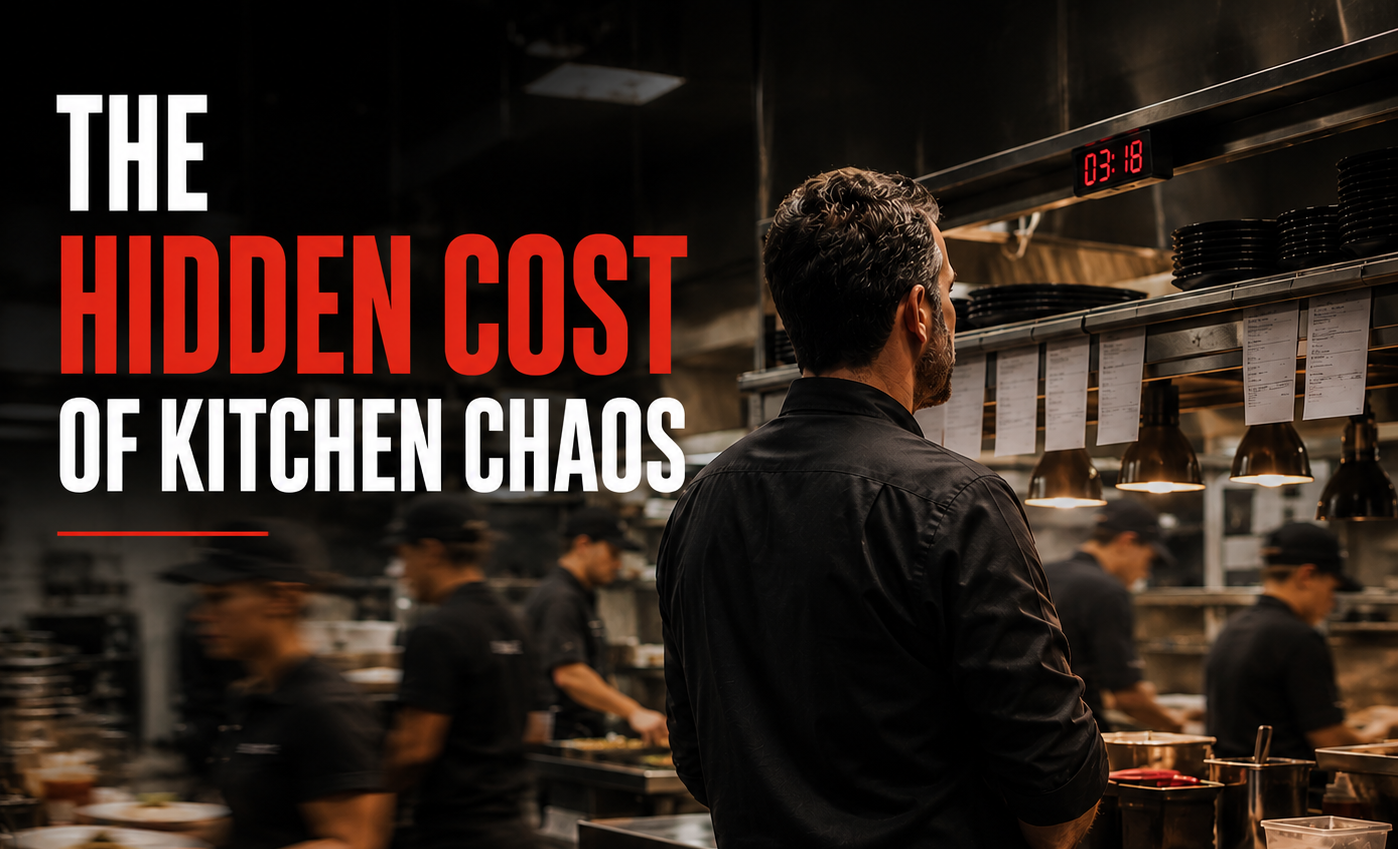
The Hidden Cost of Kitchen Chaos

Most restaurant operators know what chaos looks like.
A manager jumping between stations. Team members asking constant questions. Orders waiting on companion items. Last-minute fire drills during peak periods.
These moments are so common that many organizations accept them as part of the business.
They shouldn't.
The problem is that operational chaos rarely appears on a P&L. Instead, it shows up as small inefficiencies that compound throughout the day:
-
Delayed orders
-
Unnecessary interruptions
-
Manager firefighting
-
Inconsistent execution
-
Increased team stress
-
Poor guest experiences
Individually, each issue seems manageable. Together, they create significant drag on the operation.
For years, the restaurant industry has invested heavily in visibility. More dashboards. More reports. More screens.
Visibility matters, but visibility alone doesn't improve execution.
Knowing a bottleneck exists is different from preventing it.
As operations become more complex, with growing digital order volumes and increasing guest expectations, the challenge is no longer simply understanding what's happening in the kitchen. The challenge is coordinating work effectively enough that problems never develop in the first place.
This is why many operators are shifting their focus from monitoring to orchestration.
Monitoring helps identify issues.
Orchestration helps prevent them.
The goal isn't to create faster fire drills. It's to eliminate the need for them.
The best shifts are often the least memorable. Orders flow smoothly. Teams stay focused. Managers spend more time leading and less time solving preventable problems.
That's what operational excellence looks like.
Because operators don't need more alerts.
They need fewer surprises.